Simba Pride Safaris

Kilimanjaro · Machame Route · 7 days

the machameRoute

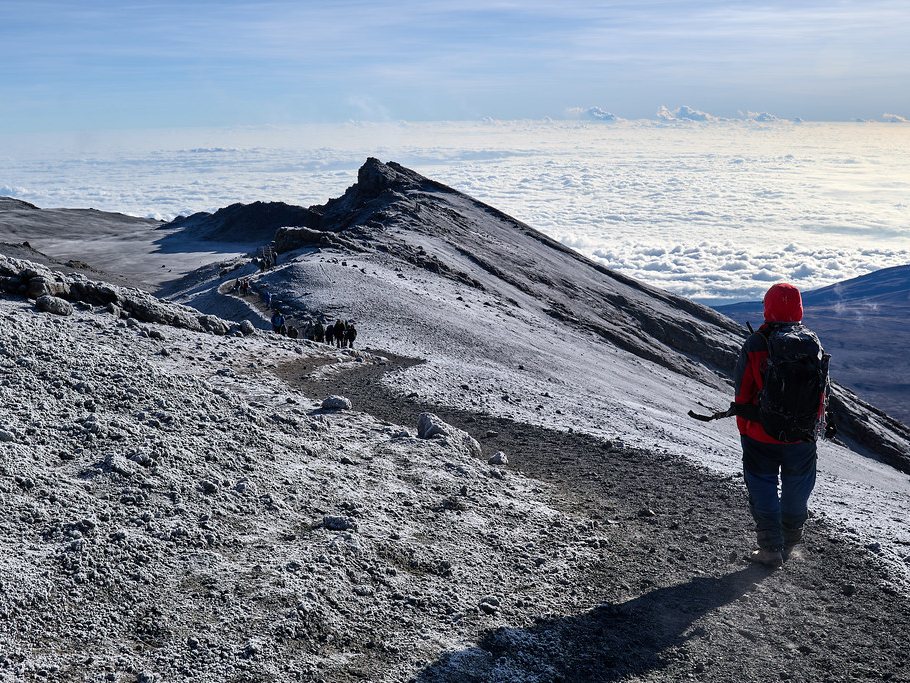
Rainforest on the first morning, the Shira plateau on the second, then the Lava Tower, the Barranco Wall and a midnight start from Barafu to Uhuru Peak at 5,895 metres. Seven days gate to gate, with a climb-high, sleep-low profile and a full crew behind you.

  • 7days
  • 6nights on the mountain
  • 5,895 mUhuru Peak
  • Fullcrew & guide
01 · Overview

The route, and why it runs this way

Machame is the busiest route on Kilimanjaro for a reason: it is varied, it is beautiful, and its shape helps your body adjust. The seven days are all on the mountain, gate to gate; the hotel night before you start is included on top.

You start on the south-west side at Machame Gate and climb through rainforest to the moorland, then cross onto the Shira plateau. Day three is the key to the whole climb: you walk up to the Lava Tower at about 4,600 metres and come back down to sleep at Barranco, which is how your body learns to cope with the height. From there you scramble up the Barranco Wall, traverse to Karanga and Barafu, and leave for the summit at midnight. You come down the Mweka side, so every camp is new.

Starts

Machame Gate, day 1

We collect you from your hotel in Moshi or Arusha, where the night before the climb is included.

Ends

Mweka Gate, day 7

Off the mountain by early afternoon, then the drive back to Moshi or Arusha.

Style

Private climb, full crew

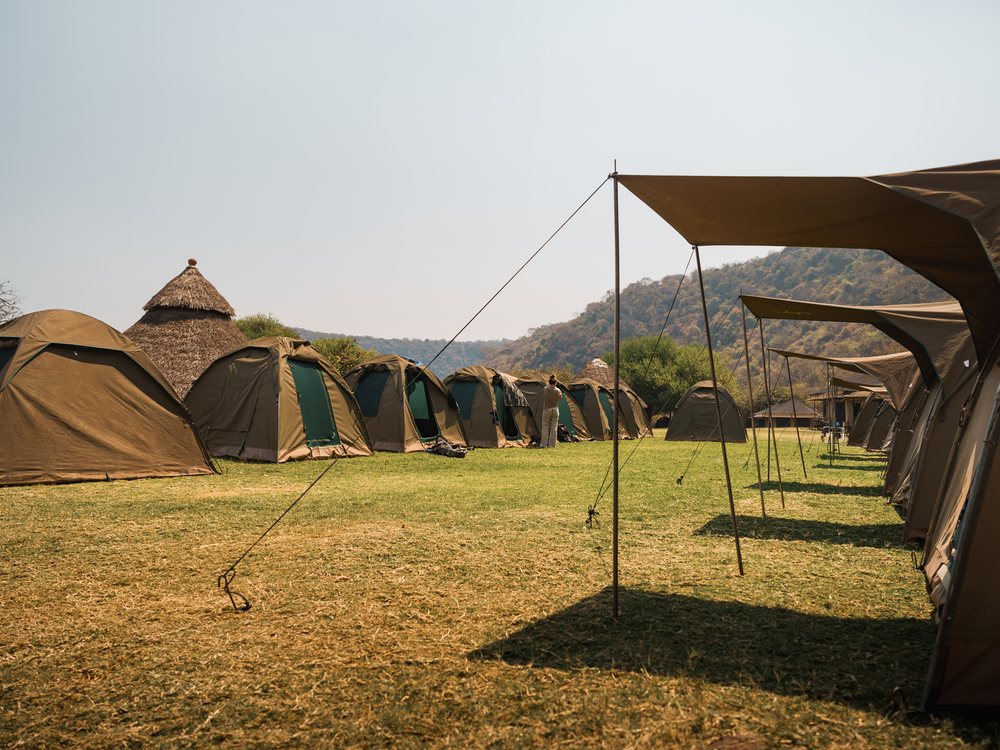
Licensed guide, assistant guides, cook and porters, mountain tents and a dining tent.

Summit rate

90% on this route

The figure on our Kilimanjaro page. It is not a promise: weather and your body decide on the night.

01

Trek day · B L D

Through the rainforest to Machame Camp
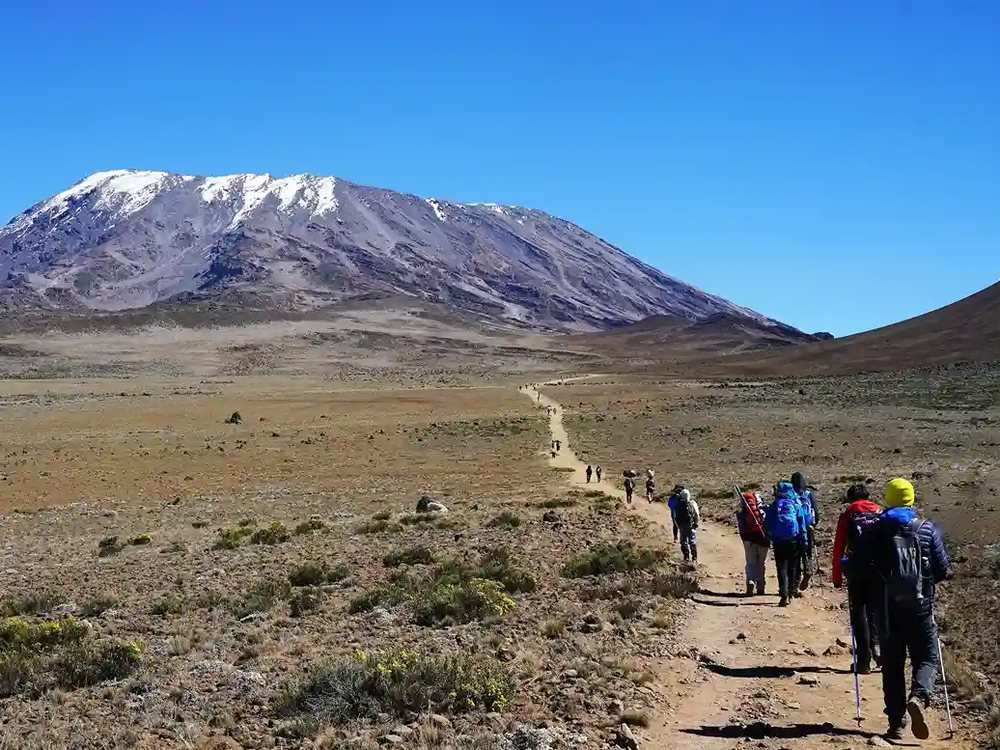
After breakfast at your hotel your guide checks your kit and drives you about an hour to Machame Gate, at roughly 1,800 metres. While the permits are processed the porters weigh and pack their loads, and then you walk into the forest.

The path climbs steadily under tall trees hung with moss, with colobus and blue monkeys in the canopy if you are lucky. The forest thins into giant heather near the top, and the crew has your tent up and tea ready when you reach camp.

Meals
Breakfast, lunch, dinner
Walk
11 km, 5 to 7 hours
Sleep
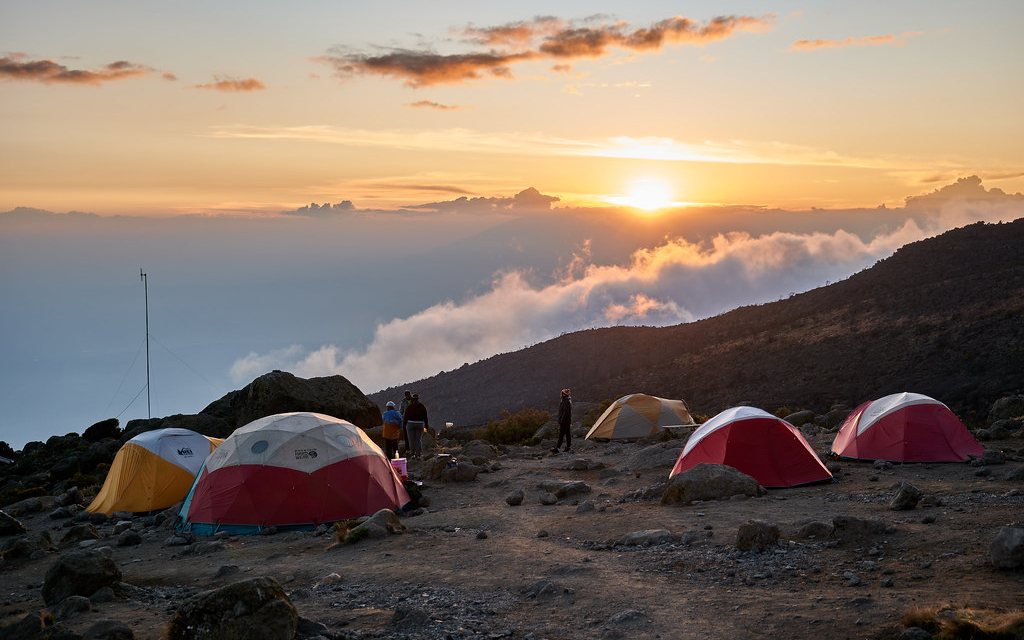
Machame Camp, 3,010 m in our tents
02

Trek day · B L D

Up onto the Shira plateau

A shorter day, but a steep one. The trail climbs a rocky ridge through heather and moorland, and for the first time you look back over the forest to the plains below.

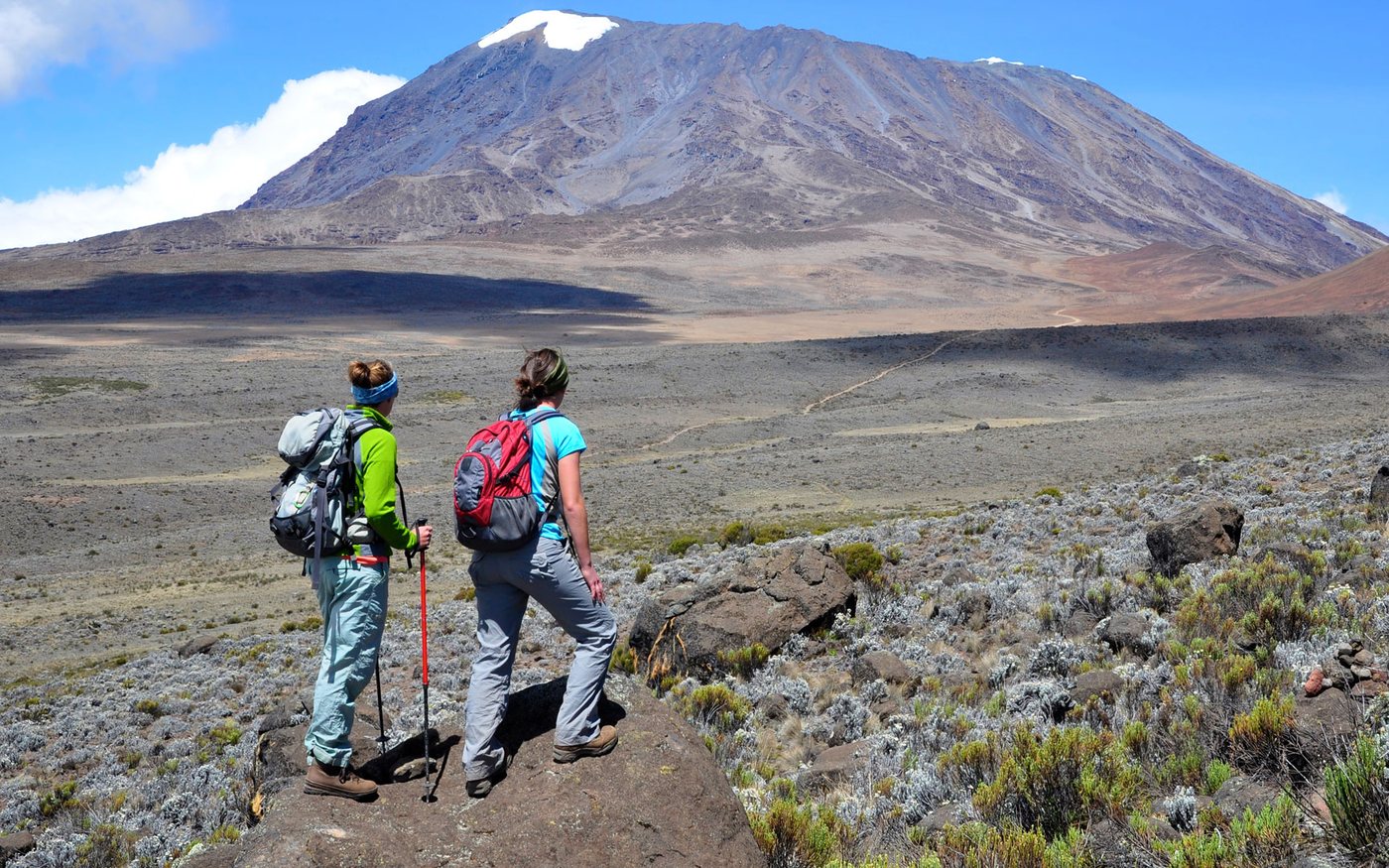
By early afternoon you are on the Shira plateau, a wide, open caldera with Kibo’s glaciers ahead. Rest, drink plenty, and take a short walk above camp before dinner if you feel well.

Meals
Breakfast, lunch, dinner
Walk
5 km, 4 to 6 hours
Sleep
Shira Camp, 3,840 m in our tents
03

Acclimatisation day · B L D

Climb high to the Lava Tower, sleep low

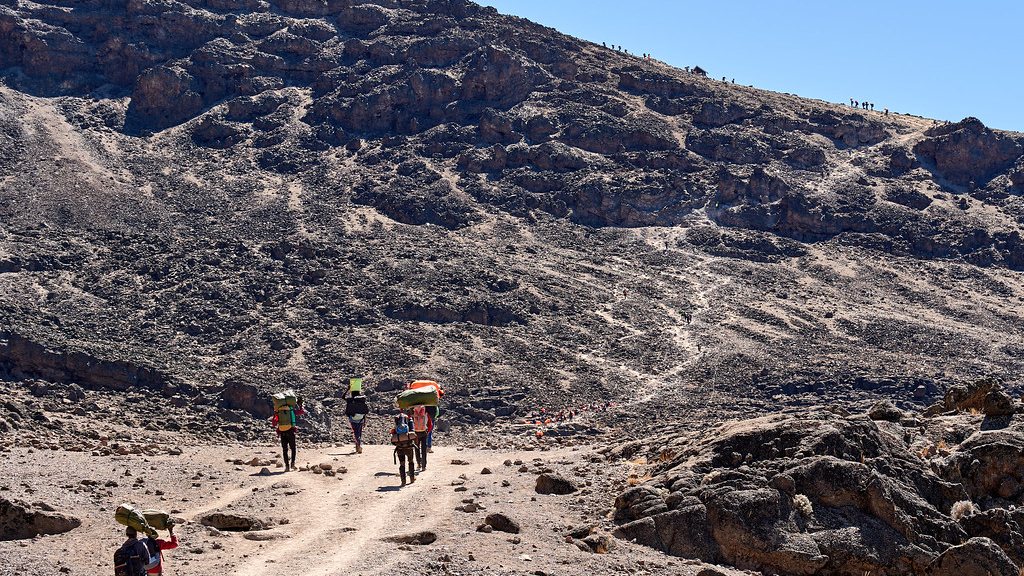
Today you walk east into alpine desert and climb to the Lava Tower, a volcanic plug at about 4,600 metres. Lunch is here, and it is normal to feel the height: a headache, a slow pace, not much appetite.

Then you drop almost 700 metres into the Barranco valley, among giant groundsels, and sleep lower than you climbed. Most climbers feel noticeably better by evening, and that is the point of the day.

Meals
Breakfast, lunch, dinner
Walk
10 km, 6 to 8 hours
Sleep
Barranco Camp, 3,960 m in our tents
04

Trek day · B L D

The Barranco Wall and on to Karanga

The morning starts with the Barranco Wall, a 250-metre scramble that looks harder from below than it is. You use your hands in places, never ropes, and the guides show you every step.

From the top the trail rolls up and down across ridges and valleys to Karanga, the last water point on the route. It is a short day on purpose, so you arrive with time to rest.

Meals
Breakfast, lunch, dinner
Walk
5 km, 4 to 5 hours
Sleep
Karanga Camp, 3,995 m in our tents
05

Trek day · B L D

Up to Barafu, and an early night

A steady climb over bare rock and scree brings you to Barafu, the base camp for the summit, on an exposed ridge. You arrive around lunchtime with the summit cone directly above you.

The afternoon is for resting, laying out your summit layers and eating well. Your guide runs through the night ahead, checks your oxygen saturation and pulse, and you are in your sleeping bag by 7 pm.

Meals
Breakfast, lunch, early dinner
Walk
4 km, 3 to 4 hours
Sleep
Barafu Camp, 4,673 m until midnight
06

Summit night · B L D

Uhuru Peak at sunrise

You leave camp around midnight with tea, biscuits and a head torch, and climb slowly in the dark for six to eight hours to Stella Point on the crater rim. It is cold, well below freezing, and the pace is deliberately slow.

From Stella Point the rim path leads to Uhuru Peak at 5,895 metres, ideally as the sun comes up over the glaciers. After photographs you descend to Barafu for breakfast and a rest, then continue down to Mweka Camp in the forest edge, where the air feels thick and warm.

Meals
Snack, breakfast, lunch, dinner
Highlight
Sunrise on the crater rim
Sleep
Mweka Camp, 3,100 m in our tents
07

Descent · B L

Down through the forest to Mweka Gate

A last walk down through the rainforest, easier on the lungs and harder on the knees. Walking poles help here.

At Mweka Gate you sign out and collect your summit certificate, then there is lunch and a thank-you to the crew. Your guide drives you back to Moshi or Arusha, or on to Kilimanjaro International for an evening flight.

Meals
Breakfast, lunch
Ends
Moshi, Arusha or JRO
Next
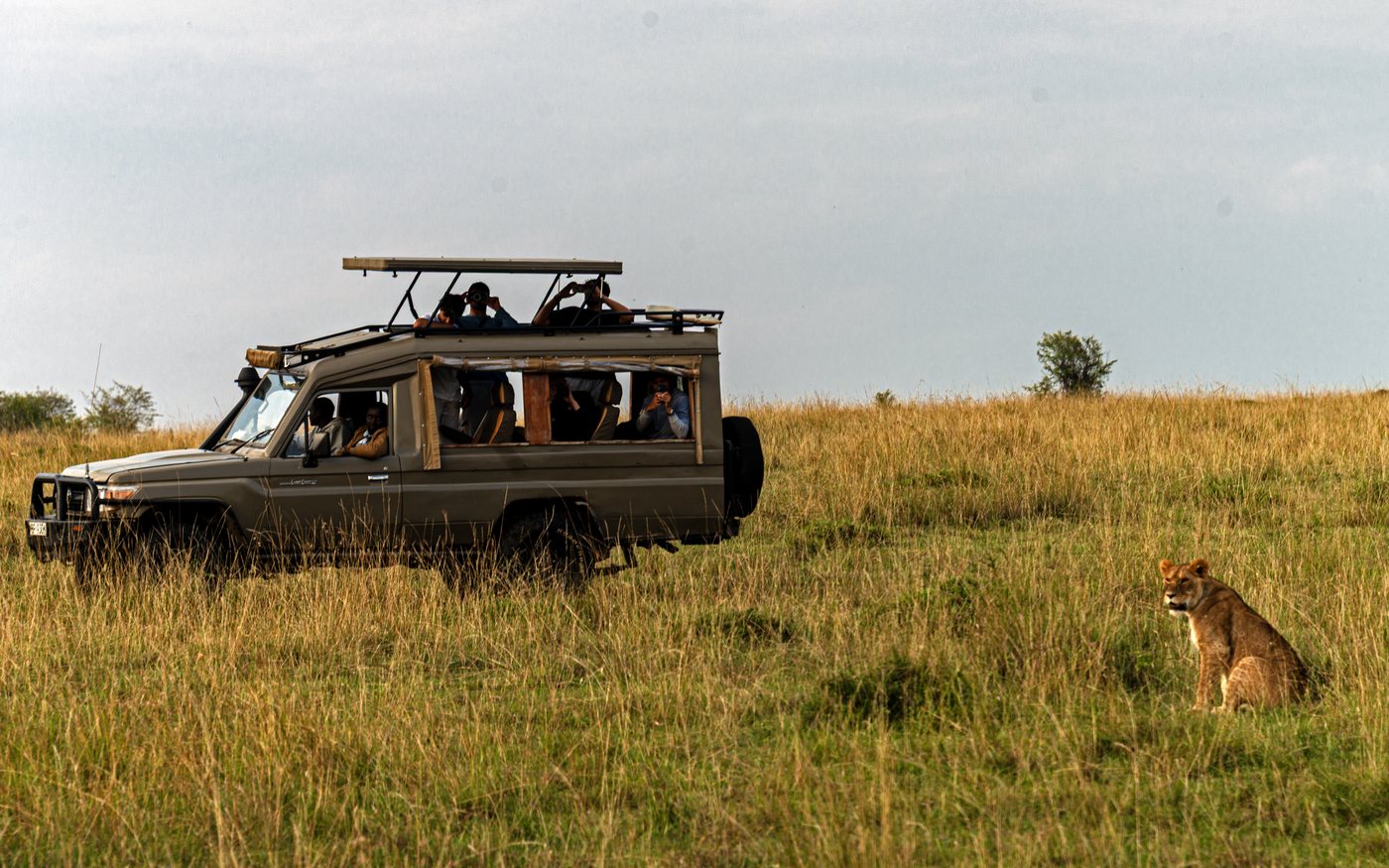
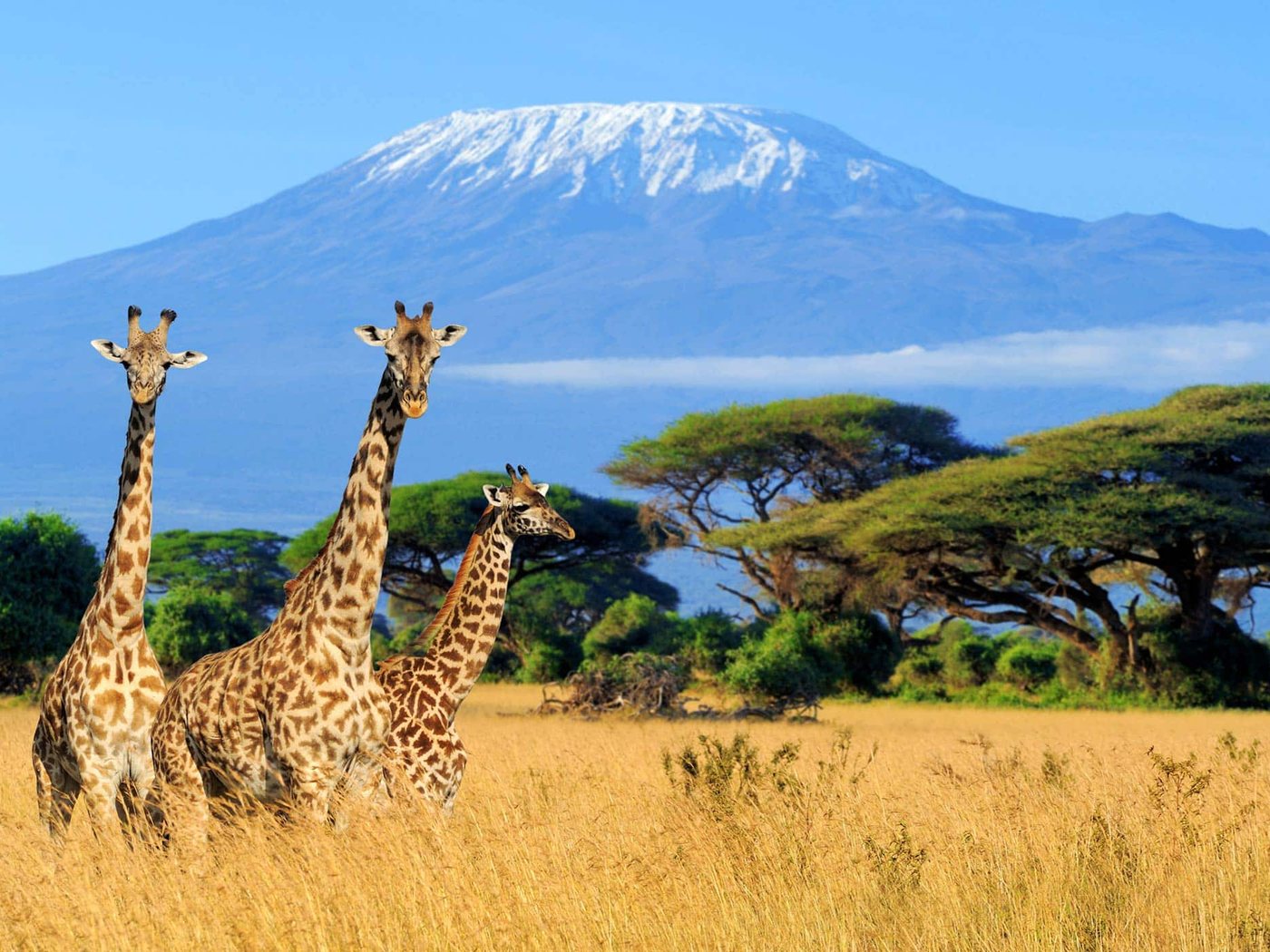
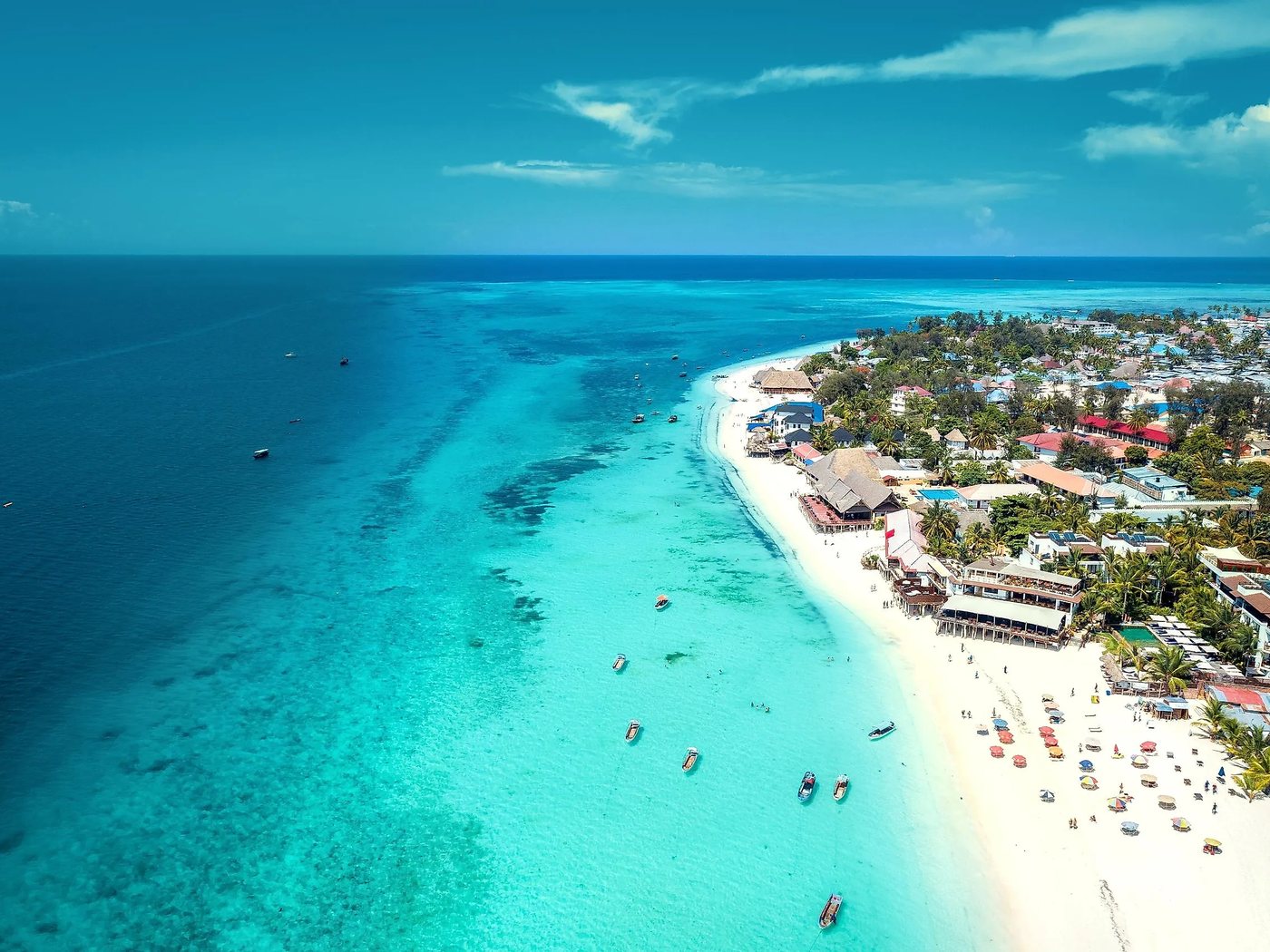
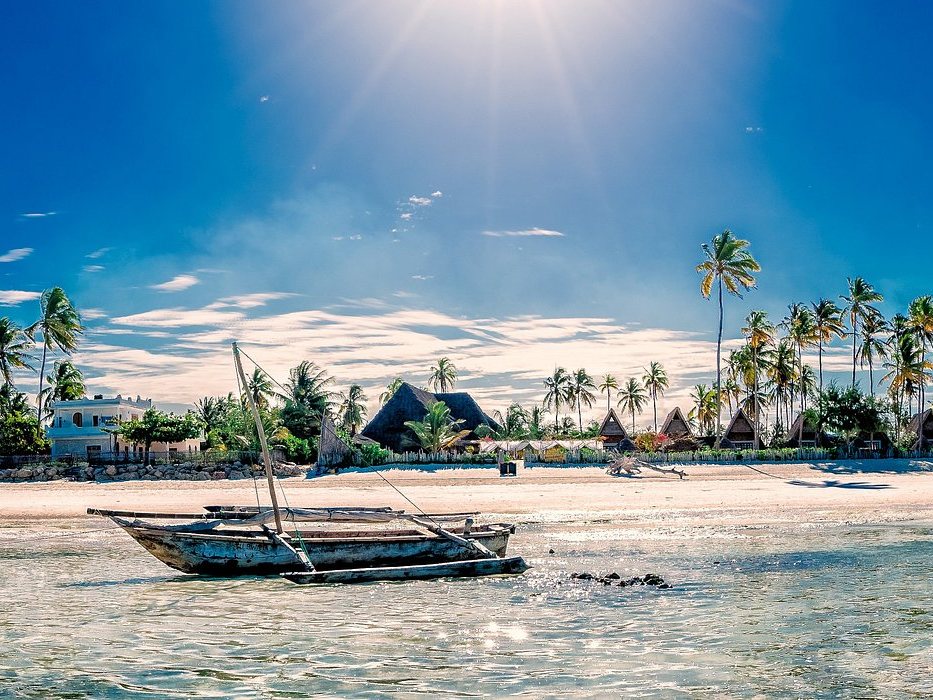
A safari or Zanzibar after the climb

When to climb

Clear skies or quiet trails?

You can climb all year, but the rains decide how muddy the forest is and how clear the summit is. Choose a season to see what the mountain is like.

  • Best for this trip
  • Good
  • Quiet season, fewer people

Summit night is cold in every month: expect well below freezing at the top whatever the season.

What it costs

Share the crew, pay less each

Park, camping and rescue fees, your full crew, tents, all meals on the mountain and a hotel night before you start, priced per person. The more of you share the crew, the less each of you pays. No booking fees.

Standard fromUS$2,150per person sharing

Important information

All prices are per person and exclude international flights. Final rates depend on your travel dates, seasonal park fees and availability; we confirm them in writing with your quote.

Your selection · click a group size2 guests · Standard1 tent

Climbing with children

Kilimanjaro National Park sets a minimum age of 10 for summit climbs, and we recommend 16 and over. Keen younger walkers can climb with a parent; we talk it through with you first, because children feel the altitude like everyone else and are less likely to say so.

in the price

  • Park, camping and rescue fees
  • Licensed guide, assistant guides, cook and porters
  • Mountain tents, dining tent, all meals and filtered water
  • Oxygen, pulse oximeter and first-aid kit
  • Health checks twice a day on the mountain
  • One hotel night before the climb, Moshi or Arusha
  • Transfers between your hotel and the gates

not in the price

  • International flights and visa
  • Travel insurance with altitude and evacuation cover
  • Sleeping bag and gear hire (available)
  • Tips for your crew
  • Hotel nights after the climb
  • Drinks and extras at the hotel

Make it yours

Add to the week

Tick anything you like the sound of. It goes straight into your enquiry, and we will price it with the trip.

Before you go

The practical part

Questions

No. The Barranco Wall needs your hands in a few places, but there are no ropes on this route. Fitness, slow pacing and drinking enough matter far more than experience; long hill walks with a daypack are the best training.

Most climbers feel some effects above 4,000 metres: a headache, poor sleep, little appetite. That is normal and usually eases with rest and water. Your guide checks your oxygen saturation and pulse twice a day and carries oxygen; if symptoms become serious, the answer is to go down, and the guide makes that call.

For most fit walkers, yes: the Lava Tower day gives Machame a good acclimatisation profile. If you want better odds, add a night at Karanga, or choose the eight-day Lemosho, which adds a day on the Shira plateau.

Cold, slow and long: six to eight hours up in the dark to Stella Point, then the rim to Uhuru Peak, then a long descent to Mweka Camp. Expect 12 to 16 hours on your feet in total.

Yes. Every climb is private to your group, even if that group is you. A solo climber has the same guide, cook and porters, which is why the solo supplement applies.

ready when you are

Seven days, one crew, your dates

Tell us when you would like to climb and who is coming. We reply with the day-by-day plan, an exact price and honest advice on the month.

Admit
2
guests
SPS · 07

Other journeys like this one

Loading itinerary…
Saved Trips